“I want to find meaning in my job.”
“I want to save the world.”
“Everyone is talking about sustainability. I thought it would be a good opportunity.”
These are some of the answers I hear when I ask applicants why they want to work in ESG and sustainability.
I usually nod and smile. Not because I think they are naïve, but because I recognise myself in them. I entered this field with the same dream. I wanted to save the world. What I did not understand then was how different the purpose of a field can feel from the reality of its everyday work.
The dream and the everyday reality
Climate action. Protecting biodiversity. Improving social welfare. Strengthening governance. These are causes worth caring about. Naturally, a career connected to them can seem like a direct route to meaningful work.
But what does that work actually look like?
In my experience as a consultant, it often starts with solving a client’s immediate problem, not necessarily pursuing the environmental or social outcome that brought me into the field.
You put your feet on the ground and your hands on the laptop. There are gap assessments to run, sustainability roadmaps to develop, workshops to conduct, and reports to deliver. Often, the immediate priority is meeting a disclosure requirement or a compliance deadline. The ambition I bring to the work is not always the ambition behind the brief.
Sometimes, recommendations remain words in a report. The disclosures are completed. The boxes are ticked. The project ends. Other times, I simply do not get to see what happens next. I do not know whether the roadmap becomes action or whether the workshop changes a decision months later.
That distance between the work I deliver and the impact I hope for can be difficult to sit with. I came into this field wanting to make a difference. Some days, it feels like I am just trying to meet a deadline.
Breaking through the illusion
The illusion was not that sustainability matters. It was that working in sustainability would automatically make everything I did feel meaningful.
A field can have an important purpose without every assignment feeling purposeful. I can believe in the work and still feel frustrated by how it is done. Recognising that did not mean I had to abandon my ideals. But I did have to examine my expectations.
What did I think this career would give me? What could I realistically contribute? Which frustrations was I willing to accept? And were my reasons for staying still enough?
Some people may answer those questions by finding another role, another organisation, or another field. That does not necessarily mean they care less. It may mean they have found a different way to contribute.
For me, the answer has been to stay, but with a clearer understanding of why.
Why I am still here
Part of the answer is hope.
I still hope for a future in which sustainability becomes part of how we live and run businesses, rather than something addressed mainly when a report is due. I do not know when that future will arrive, or how much of it I will get to see. But I choose to believe that the work I do today can contribute to it.
That belief matters to me. Still, hope is only part of the answer.
The other part is much more personal: I have found aspects of the work that I genuinely love.
I love giving talks and conducting workshops. I enjoy taking an idea, making it understandable, and discussing it with people. That is why I share on LinkedIn and YouTube, and why I sometimes choose to spend my weekends recording videos or my evenings editing videos.
That is how my interest expresses itself. It is not a measure of anyone else’s passion or commitment. For me, these activities are not simply extra work. They are opportunities to do something I enjoy with a subject I care about.
Finding the pattern in what makes me feel alive
Looking back, the clues were there long before I entered sustainability.
I enjoyed performing on stage, whether I was singing, dancing, or acting.
When I worked part-time promoting products in supermarkets, I enjoyed introducing something new to customers and persuading them to give it a try. When I worked at a café, I liked talking to customers about the cakes and helping them choose.
Friends came to me when they needed an emcee for games, reading clubs, events, and even weddings.
The settings were different, but the pattern was the same. I enjoyed connecting with people, holding their attention, and helping them engage with something.
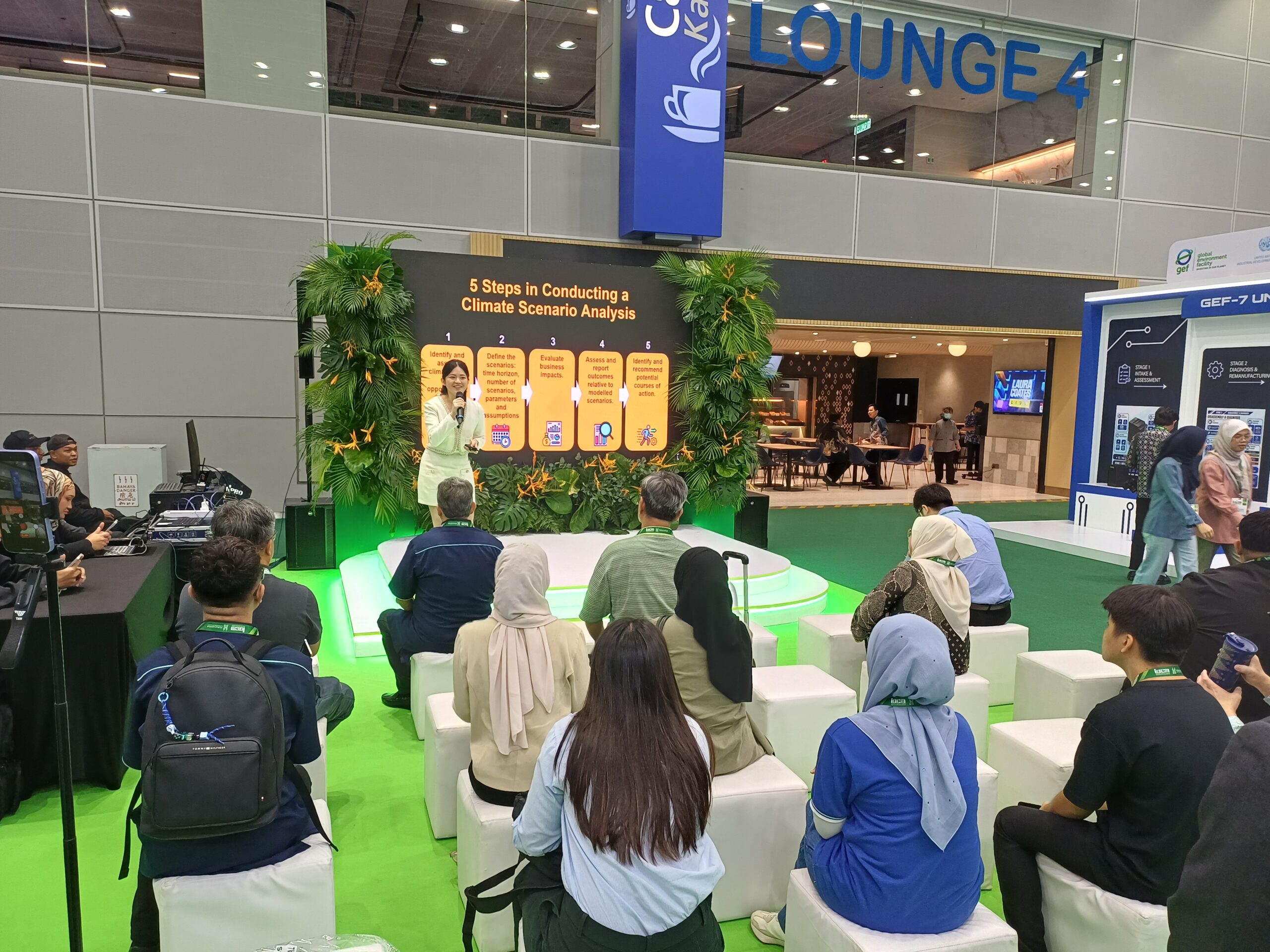
I feel most alive when I am holding a microphone.
Naturally, at work, I gravitate towards training corporate clients, speaking at conferences, and hosting webinars.
Sustainability gives me a subject I care about. Speaking and teaching give me a way to contribute that feels like me. I did not discover this through one sudden moment of clarity. I recognised it by looking back at the experiences I kept enjoying.
Meaning does not mean loving every task
Of course, I do not get to spend every day doing those things. I still manage projects, write reports, coordinate tasks, and handle the less exciting parts of the job. That is part of my working life too.
Finding what I enjoy has not made those responsibilities disappear. Nor has it made every day fulfilling. But it has helped me understand what I want to make more room for, and why the career remains worthwhile to me.
I no longer expect the label “ESG and sustainability” to provide all the meaning on its own.
Instead, I look at the relationship between the purpose I believe in, the contribution I can make, and the activities that bring me energy. That is where I find my reasons to keep going.
A career is part of a life, not its entire meaning
I also find myself questioning the pressure to make a job carry the meaning of an entire life.
What if being alive: learning, connecting with people, experiencing the world, is already meaningful?
I want my work to matter. But I do not want to measure my whole life by my job title, my professional visibility, or whether other people find my career impressive.
I want to live a life I would remember, not build one around being remembered by others.
Work can be an important part of that life. It does not have to be all of it.
Finding your own path
To anyone entering ESG and sustainability in search of a meaningful career: I understand the hope you bring. I started there too.
Bring your ideals. But give yourself permission to question your expectations.
Get curious about the work itself, not just the image of the field. Notice which activities energise you, which frustrations you can accept, and where you feel able to contribute.
If you do not yet know what you enjoy, you do not need to force an answer. Try something unfamiliar. Speak to someone whose work interests you. Pay attention to the moments when you feel engaged and look for the pattern.
Do I find my career in ESG and sustainability meaningful?
Yes. Not because every report changes the world, or because I enjoy every task. I still believe in the purpose of the work, and I have found ways to contribute through what I enjoy and do well.
The field gives me a direction. It does not give me a complete definition of a meaningful life.
I have not abandoned the dream of a better world. I am finding my own way of contributing to it, and I hope you are too.
May all beings be happy.
Love,
Jia Xin




Leave A Comment